5 Things Your Professor Notices Before Reading Your Essay
5 Things Your Professor Notices Before Reading Your Essay
Your professor hasn't even read your first sentence yet.
And they've probably already formed an opinion about your essay.
Not because of your argument.
Because of everything they notice before they start reading.
Those first impressions are usually based on simple details that show whether you followed the instructions, took time to prepare, and made your essay easy to read.
Here are five things professors commonly notice before they read your first sentence
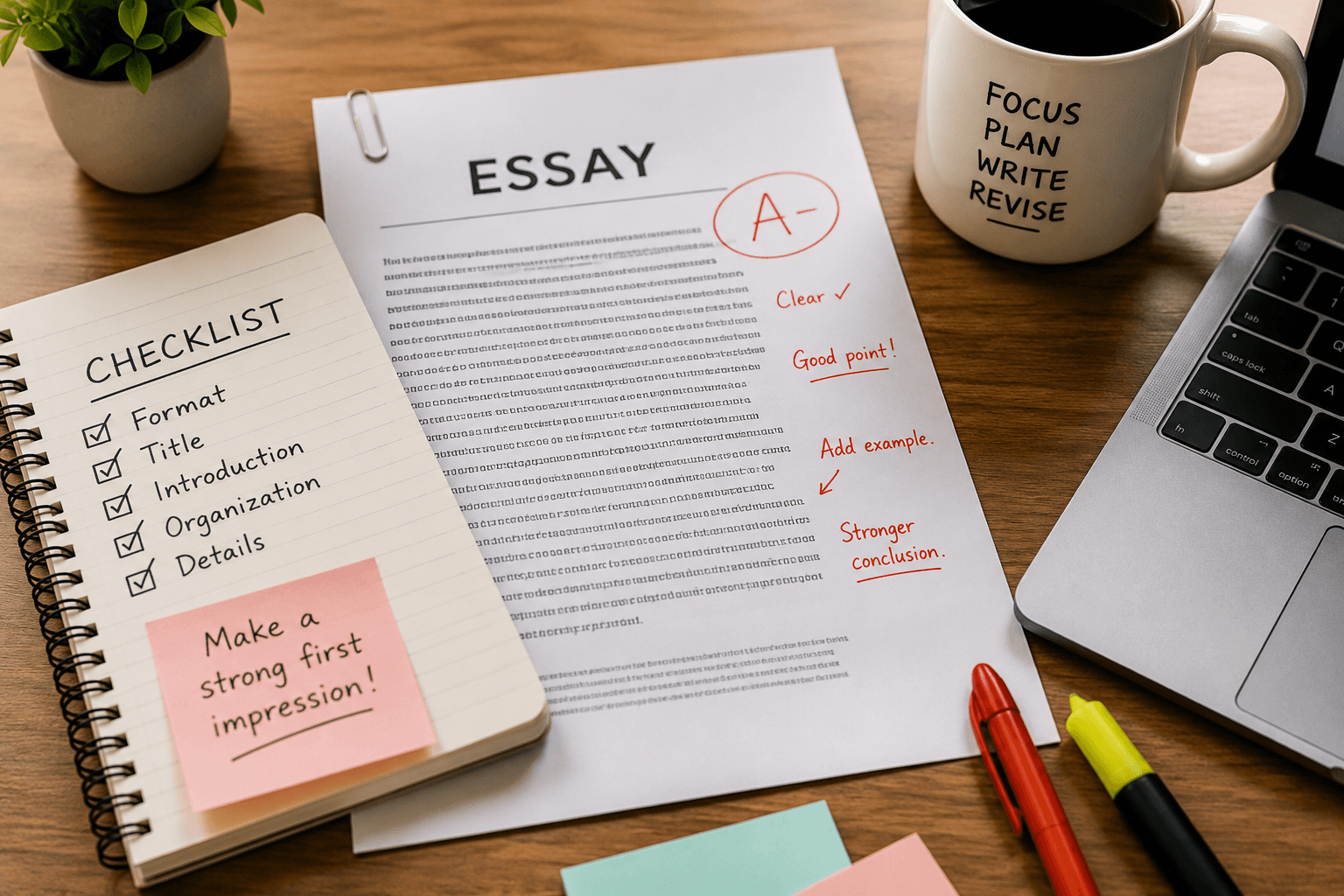
1. Formatting
The first thing professors notice is how your essay looks. If your font is different or bigger than what they asked for, your margins are uneven, or you’ve subtly increased spacing to “try to make your paper look longer,” you’ve already lost credibility. On the other hand, a clean paper in the requested format makes the reader feel oriented from the start.
2. The Title
A title is short, but it does real work. “Essay #2” or “History Paper” tells your professor almost nothing. Professors use the title to gauge whether you understand the assignment’s core question. If your title is vague or generic, they assume your essay will be, too. For example, instead of calling an essay “Social Media,” a student writing about online activism might use “Beyond the Hashtag: How Social Media Shapes Modern Protest.” The second title gives the reader a clear sense of what to expect.
3. The Introduction
A strong opening provides context, establishes the topic, and gives the reader a reason to continue. Students sometimes begin with broad statements such as “Since the beginning of time, people have had problems.” That kind of opening often delays the actual point. If your introduction doesn’t state what you’re trying to convince the reader to believe, professors wonder if you even have an argument.
4. Organization and Flow
Before diving deep, professors check if your ideas connect. Do your paragraphs follow a logical sequence, or do you jump between unrelated points? Picture an essay with one massive paragraph that runs nearly a full page, followed by three two-sentence paragraphs. That structure suggests the ideas may not be developed evenly. Clear paragraph breaks and logical transitions show that you have arranged your evidence intentionally.
Also, professors want to see a clear line of thought where every paragraph supports your central argument. If you say one thing in the first paragraph and contradict it in the last one, they will notice immediately.
5. Attention to Detail
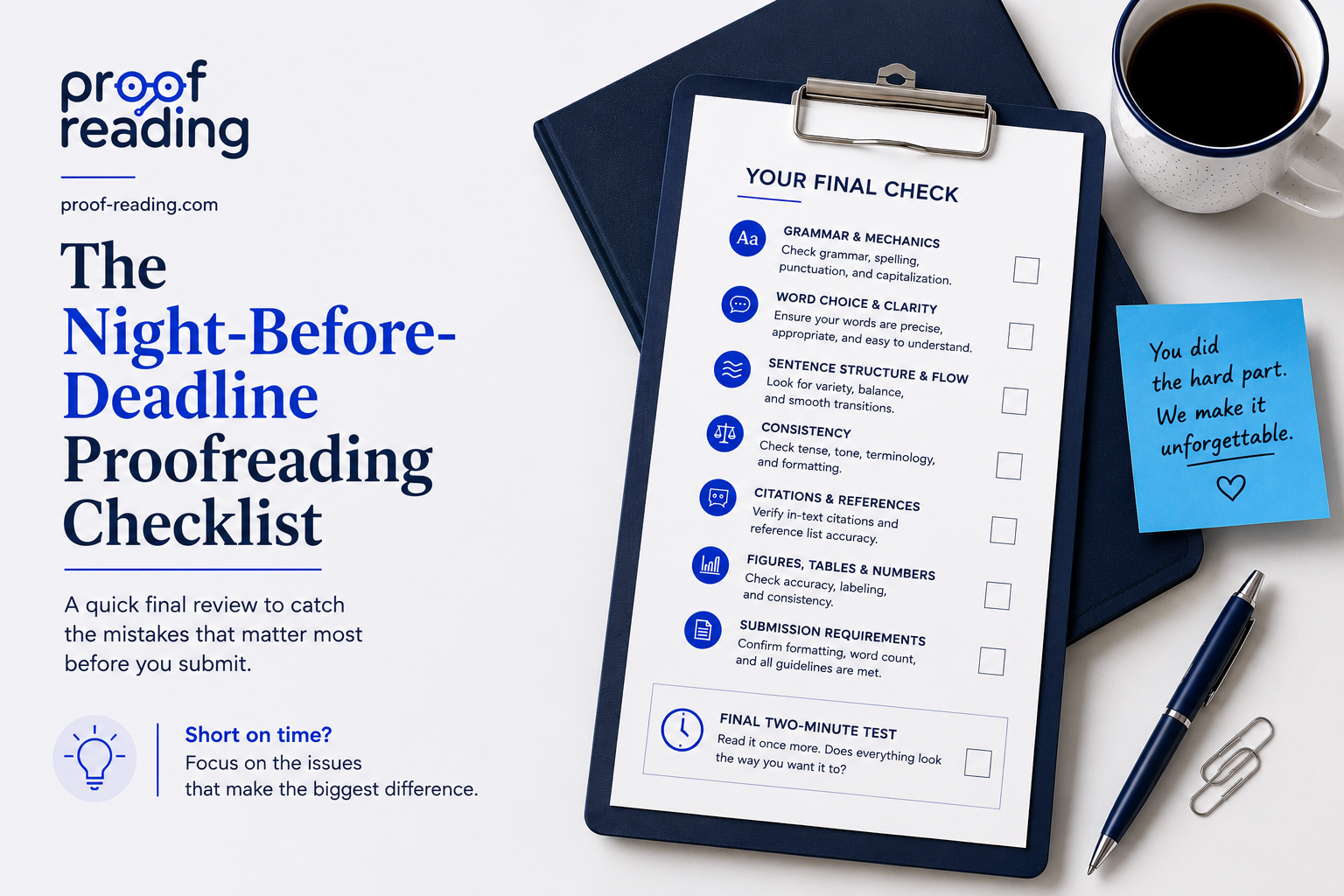
Small mistakes stand out quickly: Are citations formatted correctly? Are there typos in the header? Did you follow the word count? These errors do not automatically ruin an essay, but they can make it seem rushed. A student who misspells the professor’s name in the header or forgets page numbers in citations shows they didn’t bother reviewing their work—a red flag before the reading even begins.
In short, your essay’s skeleton is judged before its soul. A polished presentation cannot replace strong ideas, but it helps your professor reach those ideas without distraction.
Ready to Submit with Confidence?
A strong first impression starts before your professor reads the first sentence. Our professional editors can help you improve your essay's structure, clarity, grammar, and overall presentation.