Chicago Style Citation Guide for Beginners
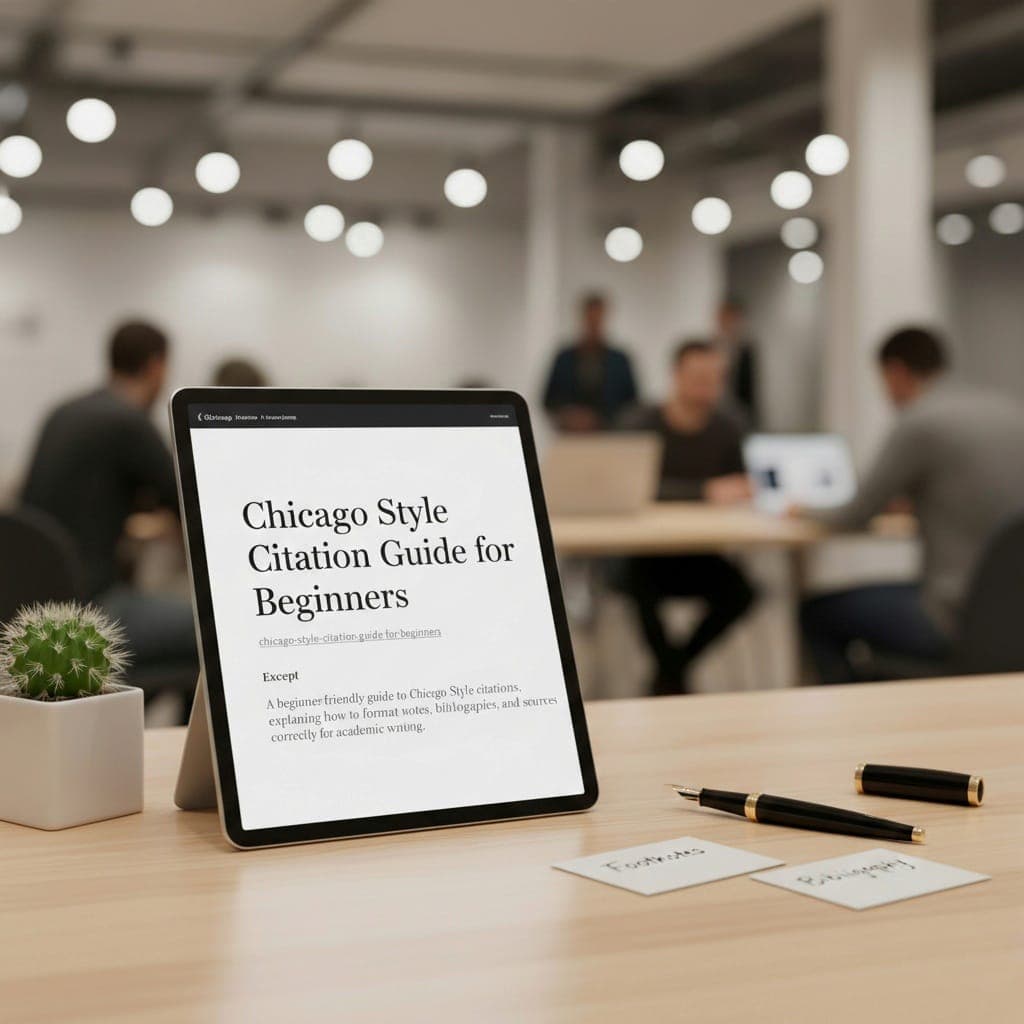
Chicago Style Citation Guide for Beginners
What Is The Chicago Manual of Style?
The Chicago Manual of Style, often abbreviated as CMS or CMOS, is a style guide published by the University of Chicago. It is among the most widely used citation styles, and in the context of publishing, the Chicago Style is often considered the standard style for books in the U.S., especially in humanities and academic publishing.
Choosing the Right Citation Method
Chicago Style offers two types of citations, and it is important to find the most suitable one for your specific needs.
The first option is “notes-bibliography.” In this system, sources are cited in footnotes or endnotes, using raised numbers in the text (superscript). Sources are commonly listed in a separate bibliography.
The second system is “author-date.” Here, sources are cited in the text, usually in parentheses, with the author’s last name and the year of publication. Each citation must have a corresponding entry in the reference list with the full bibliographic information.
Each system has its own rules for formatting, punctuation, and placement of citations, so it’s best to avoid mixing both in the same document.
Formatting Your References Correctly
Notes-Bibliography
Best for: Humanities, history, theology and religious studies, philosophy, literature, law, books, essays, and interpretative or argumentative writing.
The order of elements varies depending on the type or source:
 Please note: Shortened footnotes are used in subsequent notes; the first entry must be a full footnote.
Examples:
 Author-Date
Best for: Social and natural sciences, economics, psychology, education, business, and journal articles and reports.
In this system, we find in-text citations and a reference list at the end. Please note: For in-text citations, “Author” can be replaced by an organization if and when applicable.
 *Three or more authors.
**When there is no author.
***Multiple sources in one citation.
****Use when there is no date.
 Final Tip
Always consult the latest edition of The Chicago Manual of Style for detailed rules, and double-check formatting to ensure your citations are complete and consistent.