How to Write a Resume That Actually Gets Read
How to Write a Resume That Actually Gets Read
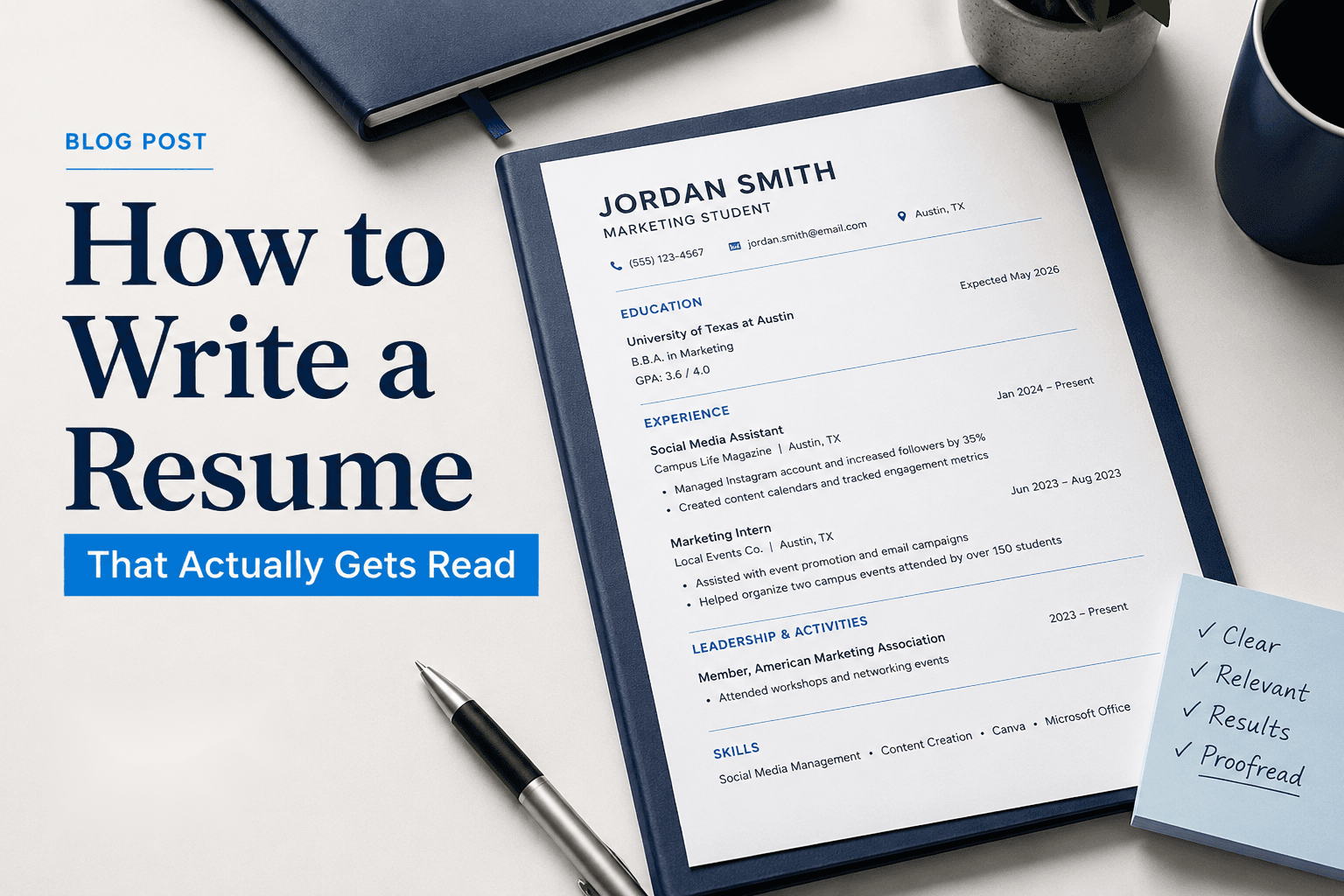
Your resume does not need to be fancy. It needs to be short, clear, and tailored to the job or internship. For students and early-career applicants, the goal is to show your strongest skills and experience quickly. Hiring managers may only look at a resume for a few seconds at first, so every detail counts—including spelling, clarity, and formatting.
Start with the Basics
Keep your resume to one page if you are a student or early in your career. Use a simple layout, readable font, and clear section headings.
Include:
Name and contact information (this includes phone number, professional email, and city/state if needed)*
Education
Relevant experience from jobs, volunteer work, clubs, projects, or sports
Skills
* Make sure your email address sounds professional. Use something based on your name, not an old nickname.
Tailor It to the Role
Do not send the exact same resume to every job.
Read the job description and look for skills or responsibilities that match your experience. Then, highlight those things on your resume. For example, if an internship asks for communication and social media skills, mention your student organization’s Instagram account if you helped manage it. Relevant class projects count, too.
Focus on What You Did
Show what you did and what changed because of it, not just duties. Avoid vague lines like:
“Responsible for customer service”
“Helped with events”
Instead, show your actions and results:
“Helped 30+ customers per shift and handled returns professionally.”
“Planned two campus events attended by over 100 students.”
Start bullet points with action words such as “created,” “organized,” “supported,” “analyzed,” “designed,” or “led.”
Make It Easy to Read
Use short bullet points instead of long paragraphs. Keep the design clean and easy to scan, with clear headings and plenty of white space so the page does not feel crowded.
Also, save your file as a PDF unless the application asks for another format. Name it clearly, such as: FirstName_LastName_Resume.pdf.
Before you send your resume, make sure it reads as clearly as it looks.
Professional proofreading can help catch spelling, grammar, and formatting issues that are easy to miss on your own.
[Have your resume proofread →]
Proofread Before Sending
Small errors can make you look rushed. Check spelling, dates, job titles, and contact information. Then ask a friend, a career center advisor, or a professor to review it.
Finally, avoid these three common mistakes:
Writing in full sentences or using “I.”
Including unneeded details like a photo, age, gender, or references.
Using slang or messy formatting.
A strong student resume is not about having years of experience. It is about clearly showing your skills, effort, and potential.
Ready to submit?
Your resume represents you before you get the interview. Make sure your writing is clear, polished, and free of distracting errors.