Signs Your Document Needs Professional Editing Before Submission
Finishing a document does not always mean it’s ready to submit. After working on the same text for hours, sometimes for days, it becomes difficult to see it with any distance. Everything sounds familiar, and because it sounds familiar, it also seems correct. That is usually when small problems stay in the text without being noticed.
Not sure if your document is ready to submit?
Get expert feedback to improve clarity, structure, and overall quality before submission.
✔ Improve clarity and structure
✔ Be ready for submission faster
👉 Get expert feedback on your document→
Takes less than 2 minutes — no commitment required!
One of the clearest signs that editing may help is simply reading the document too many times. After a while, the brain stops checking every word and starts filling in what it expects to see. Missing words, repeated phrases, or unclear sentences can pass without drawing attention, even though they would be obvious to someone reading the text for the first time. This is not carelessness. It is a normal effect of being too close to your own writing.
If you're noticing these issues, your document may not be ready for submission yet.
👉 Get expert feedback before you submit →
Takes less than 2 minutes — no commitment required
Another common situation happens when the ideas feel clear in your head but harder to explain on the page. This shows up often in academic papers, reports, and technical writing. Because the writer understands the topic, some steps are skipped without realizing it. The argument makes sense internally, but the reader has to work harder to follow it. A careful edit usually slows the text down in the right places and makes sure the reasoning is actually visible, not just implied.
Tone can also be a problem, even when grammar is correct. A document written for a professor should not sound the same as one written for a client, and neither should read like a casual message. When the level of formality changes from one paragraph to another, the result can feel unpolished without the writer knowing exactly why. Adjusting tone is often easier during editing than during drafting.
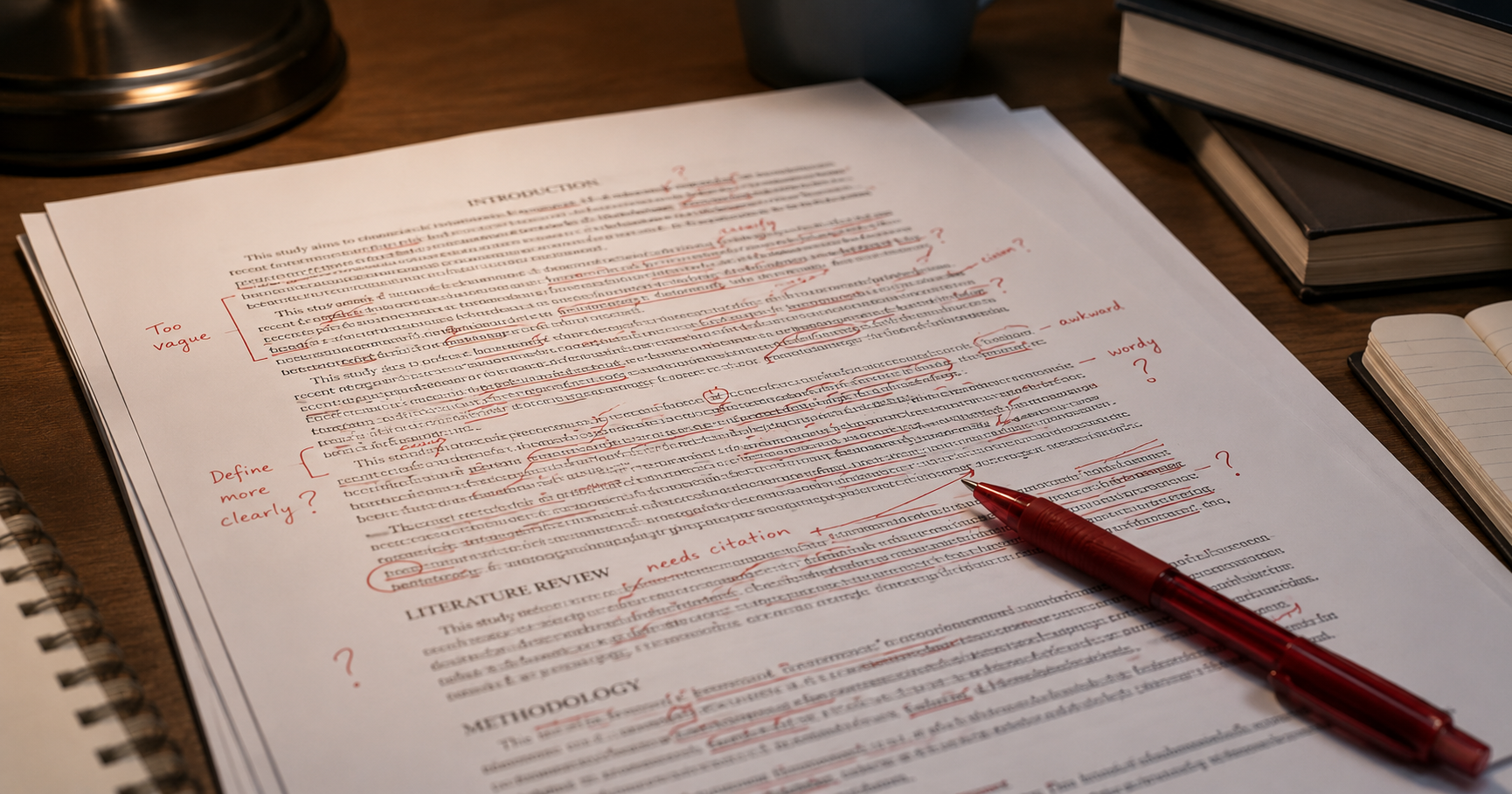
Sometimes the signs are more obvious but still difficult to fix alone. You may notice punctuation that looks inconsistent, sentences that feel awkward, or formatting that does not follow the required style. Knowing that something is wrong is not the same as knowing how to correct it. When these small issues appear in several places, the document can look less careful than it actually is.
Structure is another area where problems tend to appear late. After focusing on finishing the content, it is easy for paragraphs to become uneven or for ideas to appear in an order that only makes sense to the writer. Repetition is common too. A point explained once may come back again later in slightly different words. These things are hard to see while writing but much easier to notice during a separate review.
Deadlines make everything harder. When time is short, most people focus on completing the document, not refining it. The result is often good enough, but not as clear or as consistent as it could be. A final edit, even a brief one, can change how the whole text feels to the reader.
Many of these issues are easier to catch with a professional review.
Professional editing is not only about correcting grammar. In many cases, the biggest improvement comes from small adjustments that make the writing easier to follow. Sentences become more direct, ideas connect more naturally, and the overall tone feels more intentional. The content stays the same, but the way it is presented becomes stronger.
It is easy to think the work ends when the last sentence is written. In practice, the final review often decides how the document will be perceived. Being too familiar with the text, working under pressure, or missing small details can affect the result more than expected. Recognizing when a document needs another look is part of producing writing that feels complete, not just finished.
Before submitting your document, make sure it’s clear, consistent, and ready.
👉 Get expert feedback on your document →
Takes less than 2 minutes — no commitment required